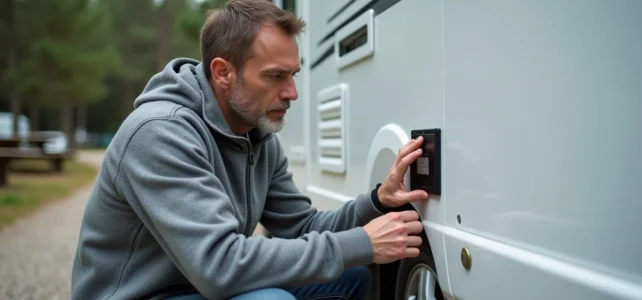
You are at a motorhome area, it’s chilly, and your Truma Combi 4 is displaying an error code on the control panel. The heating refuses to start. Before panicking or calling a repairman, know that most Truma error codes correspond to identifiable issues, sometimes resolved in just a few minutes.
Battery Voltage and Truma Error Codes: The Problem You Might Not Suspect
When the Truma Combi 4 heating system shuts off or refuses to turn on, the instinct is to check the gas. However, an increasing number of failures stem from the vehicle’s electrical supply.
The code W255H indicates a battery voltage that is too low or unstable. With the growing number of devices in recent vans (TVs, multimedia, chargers), the leisure battery is under more strain. If it drops below a certain threshold, the CP plus control panel shuts off the heating for safety.
You can find the list of Truma Combi 4 error codes on Design en Ville to quickly identify each message displayed on your panel.
Before looking for a burner or gas problem, measure the voltage at the terminals of your leisure battery. An incorrectly sized AGM battery relative to the actual consumption of the vehicle can cause this type of error repeatedly, especially at night when the heating runs continuously.
- Check that the power fuse for the Truma is not blown or corroded, which can create a voltage drop when current passes through
- Inspect the battery terminals: a poor connection produces the same symptoms as a weak battery
- If you have solar panels, ensure that the charge controller is functioning properly before blaming the Truma itself
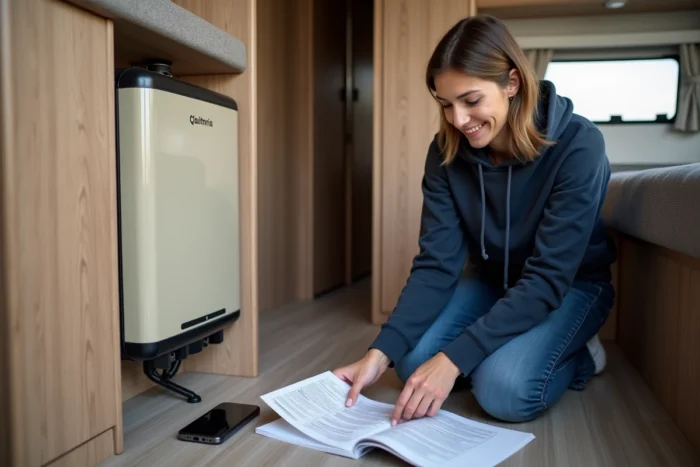
Gas Error Codes on Truma Combi 4: E507H and E517H
The codes E507H and E517H are among the most common. They indicate a problem with gas supply to the burner. The heating attempts to ignite, fails, and then goes into safety mode after several attempts.
The most common cause remains an empty bottle or a closed gas valve. It may seem obvious, but while traveling, after changing a bottle or visiting a dealer, a misaligned valve can be enough to block the device.
If the bottle is full and the valve is open, the problem often lies with the regulator or the hose. In cold weather, a regulator not suited for low temperatures can freeze and cut off the gas supply. A frozen regulator blocks the gas without leaving any visible trace if you do not inspect closely.
After correcting the issue, the device needs to be reset. On most Truma panels, a long press on the power button is sufficient. The heating will then restart its ignition sequence.
Overheating and Faulty Sensor: The Code E603H
The code E603H triggers the overheating protection of the Truma Combi 4. The device shuts off to prevent damage to its internal components.
Have you checked the air outlets in your vehicle? A piece of furniture pushed against a grille, a garment fallen over a hot air outlet: these obstructions prevent air circulation and raise the internal temperature of the device. The overheating sensor then reacts by shutting off the heating.
If the outlets are clear and the error persists, the sensor itself may be at fault. A dirty or defective temperature sensor sends incorrect values to the control system. In this case, replacing the sensor by a professional is the most reliable solution.
Difference Between an E Code and a W Code
The letters preceding the number are not decorative. An E code indicates a blocking error: the heating will not restart until the cause is addressed. A W code corresponds to a warning. The device may continue to operate in degraded mode, but the message indicates a malfunction that needs to be corrected.
This distinction changes your margin of maneuver. With a W code, you can sometimes finish the night warm while monitoring the device’s behavior. With an E code, any attempt at forced restarting may worsen the situation.
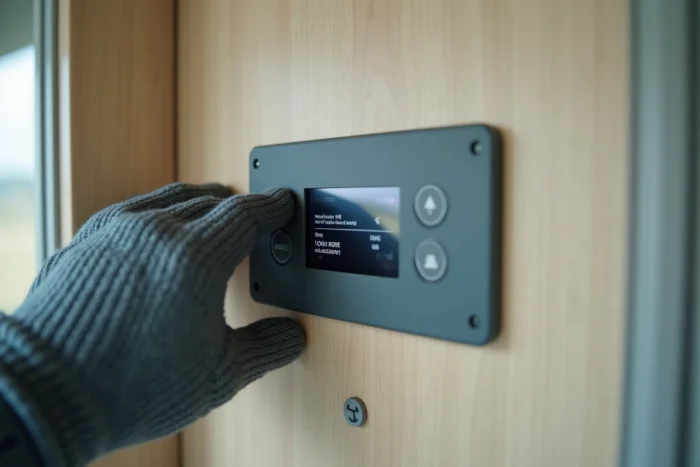
Truma Combi 4 Diesel: Specific Error Codes
If your motorhome is equipped with a Combi 4D (diesel version), some codes have a different meaning. The code E122H, for example, refers to a fuel supply interruption. The purging procedure and causes differ significantly from the gas version.
On a diesel model, an air intake in the fuel circuit after maintenance or prolonged parking is enough to trigger this error. Purging the circuit requires running the device through several cycles in a row to evacuate the air, which is not always explained in general guides.
Mixing gas and diesel diagnostics is a common mistake. The same code number can point to completely different components and procedures depending on the energy used by your Truma.
Resetting the Truma Combi 4: When and How to Proceed
Resetting is the first step to take after identifying and correcting the cause of an error. On a CP plus panel, turn off the device, wait about thirty seconds, then turn it back on. This operation clears the stored code and restarts the startup cycle.
- If the same code reappears immediately after the reset, the cause has not been resolved: resume the diagnosis
- If the device operates normally for a few hours and then the code returns, the problem is intermittent (often related to battery voltage or an aging sensor)
- On an iNet X panel, a complete reset goes through the system menu, accessible from the advanced settings
Keep in mind that a reset does not repair anything. It clears the message, not the malfunction. Resetting without correcting the cause is like turning off a smoke detector during a fire.
The best reflex while traveling is to note the exact code that appears, including the letter (E or W) and the suffix (H or not). This precise information saves considerable time for the technician if professional intervention becomes necessary.