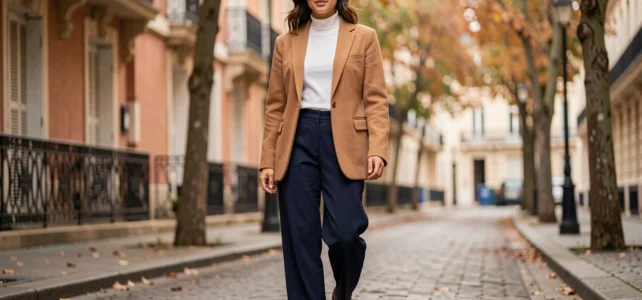
The spring-summer 2026 fashion shows have set clear directions. We observe a tightening of silhouettes around a few key pieces, with an emphasis on materials over the accumulation of colors. The fashion trends of this season are less about prints and more about cuts, finishes, and how a piece interacts with the rest of the wardrobe.
European Regulation: What Changes for “Eco” Labeled Collections
This topic is not just a matter for lawyers. The European regulation on the green transition now governs generic terms like “ecological,” “green,” or “environmentally friendly”: they must be supported by a European Eco-label or a type I label with public documentation.
Claims of “carbon neutral” or “climate neutral” based solely on the purchase of carbon credits are being challenged, even if the compensation is documented. For brands that positioned themselves as green without solid certification, this is a harsh turn.
For consumers, this means that a collection presented as responsible without clear proof is subject to sanctions. We recommend systematically checking for the presence of an official label before considering a garment as a “sustainable” purchase. The product sheets available on rev-mode.fr allow for cross-referencing the references with the certifications displayed by the brands.
Structured Cuts: Short Jacket and Flared Pants as Style Foundations
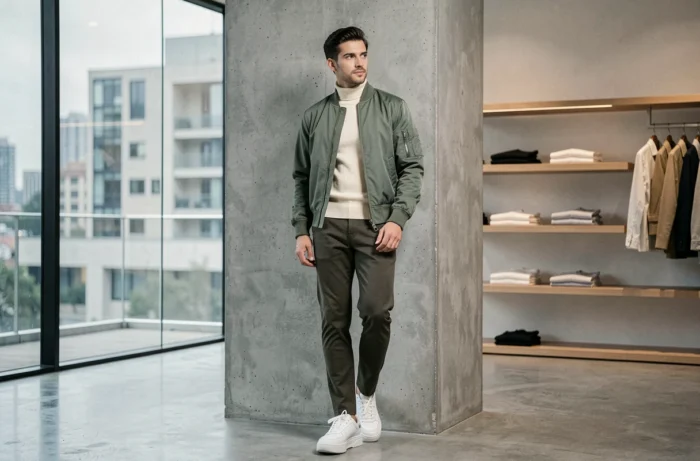
The colorful short jacket is establishing itself as the architectural piece of the wardrobe this season. It redefines the shoulder line and visually shortens the torso, radically altering the balance of a silhouette.
We primarily pair it with high-waisted, flared or barrel-cut pants. The barrel jean replaces the slim as the reference cut on runways and in urban wardrobes. Its wide leg that slightly narrows at the ankle creates a controlled volume, compatible with flat shoes as well as block heels.
Short Trench vs. Classic Trench
The short trench (mid-thigh) has overtaken the traditional long trench. The technical reason is simple: when worn with wide pants, it avoids the “column” effect that a long trench creates on a silhouette that is already voluminous below.
In spring-summer looks, the short trench works as a transitional jacket. It structures the outfit without weighing it down. Opt for materials with a minimum of structure (twill cotton, lightweight gabardine) rather than soft polyester versions that lose their shape after the first wash.
Color Palette: Butter Yellow and Warm Neutrals Dominate
Butter yellow is the guiding color of the season. This muted tone, halfway between light mustard and cream, can be worn as a total look or as a single piece against a neutral base (beige, off-white, pearl gray).
We are observing a global shift towards warm neutrals rather than cool ones. Beige pants, long relegated to the office wardrobe, are making a comeback as a standalone style piece. The key to avoiding a uniform look: play with textures.
- Wrinkled linen for fluid pants that catch the light differently depending on the folds
- Brushed cotton on a short jacket, adding visual density without weight
- Ribbed knit in butter yellow for an oversized sweater that contrasts with a fitted bottom
Oversized Sweater and Structured Dress: Two Pieces to Calibrate Precisely
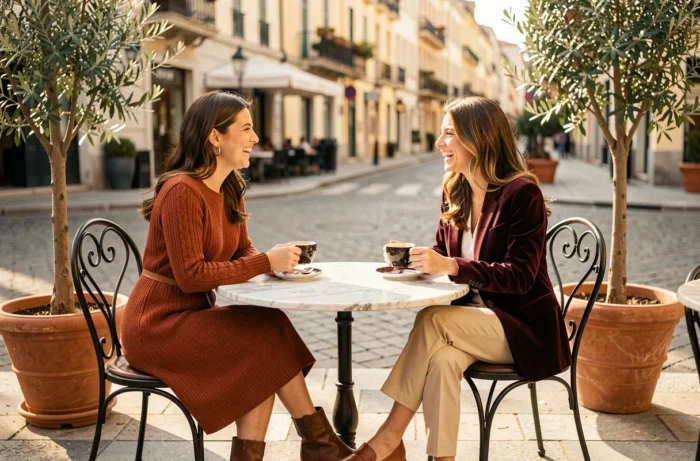
The oversized sweater remains a strong trend, but its use has evolved. In spring-summer, it is worn in fine knit or openwork cotton, not in thick wool. The volume of the sweater must balance a fitted bottom, never double a wide bottom.
A common mistake is to layer an oversized piece over barrel jeans. The result is a silhouette without reference points, where the eye doesn’t know where to land. An oversized fine knit works with straight jeans or a midi skirt.
Dresses: The Return of Tailored Constructions
This season’s dresses borrow from tailored wardrobes. Defined shoulders, waist darts, clean hems. We are moving away from fluid and deconstructed dresses that dominated previous seasons.
This type of dress stands on its own. There’s no need to overload with accessories. A thin belt, closed shoes, a structured bag: three elements maximum around a tailored dress for a look that remains readable.
Materials and Finishes: What Touch Says About Quality
Materials matter more than colors this season. The standout collections focus on the hand of the fabric (its texture to the touch) rather than the print.
- Twill cotton is back on jackets and pants, with a sufficiently dense weight to hold the shape without lining
- Mixed linen (linen-cotton or linen-viscose) offers fluidity without the excessive wrinkling of pure linen
- Ribbed knits in natural fibers replace synthetic jerseys in everyday pieces
A garment whose material does not hold its shape after a few uses compromises the entire silhouette. Checking the composition and weight before purchase remains the most cost-effective gesture to enhance your style over time.
This season’s fashion trends converge towards a streamlined wardrobe, where each piece has a precise technical role in constructing the silhouette. The European regulatory framework adds an additional filter: the brands that will survive the sorting are those whose material commitments hold up under scrutiny. This is now a parameter of choice that enters the style equation.