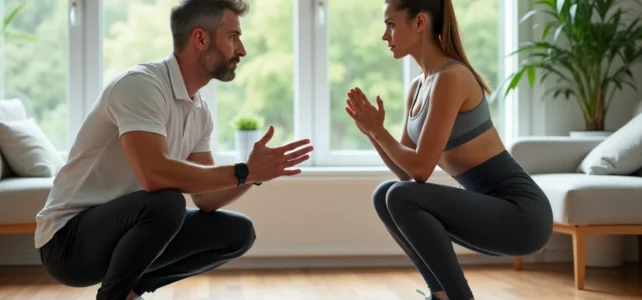
We’ve all experienced that evening session that gets canceled because the journey to the gym feels insurmountable after a long workday. A home fitness coach removes this logistical obstacle, but their true contribution goes beyond saving time. They create a training environment tailored to your space, body type, and medical constraints, which fundamentally changes the nature of the workout.
Tax credit and home coaching: a real cost often underestimated
The first instinct when comparing the rates of a home coach with a gym membership is to see the raw difference. One often overlooks a direct tax mechanism: home fitness coaching falls under personal services and entitles you to a 50% tax credit on the amounts paid. This credit applies even to non-taxable households, in the form of a refund.
In practical terms, a session billed at a standard rate, after the credit, costs about the same as several months of premium gym membership. Over a regular follow-up of several months, home coaching becomes financially competitive with a high-end gym. Platforms like moncoachadomicile.com facilitate connections with coaches registered under this framework, ensuring eligibility for the tax scheme.
The condition: go through an accredited organization or a registered coach as a personal services provider. An independent coach not registered in this framework does not allow you to benefit from the credit. This point should be verified before signing anything.
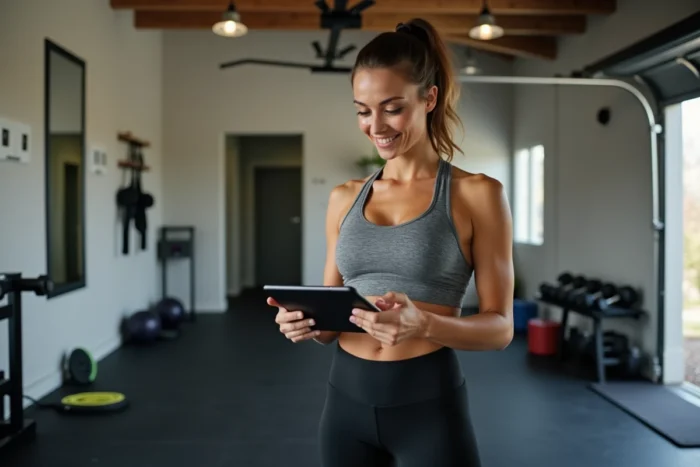
Adapting exercises to a small space: what a field diagnosis changes
An apartment in the city center with a few square meters of living room does not offer the same possibilities as a house with a garage. The home coach starts with a diagnosis of the available space, and this is where personalization takes on a concrete meaning.
Common constraints and practical solutions
Low ceilings, neighbors below, fragile floors: these constraints automatically eliminate certain exercises (jumps, heavy kettlebells placed on the floor). A trained coach reformulates the program around adapted movements.
- In an apartment with close neighbors, bodyweight exercises, resistance bands, and isometric exercises that generate no noise or vibrations are prioritized
- With a balcony or terrace, the coach can incorporate partial outdoor sessions for movements requiring more range
- In a very limited space (less than four square meters free), circuits with reduced mobility, such as planks, static squats, and breathing exercises, replace traditional workouts
Feedback varies on this point: some people find that training in a small space limits progress on pure strength goals. For general muscle strengthening and well-being, the space constraint can be effectively navigated.
Sleep and recovery: the overlooked angle of home coaching
Most gym programs stop at the end of the session. A home coach who works on wellness routines goes further: they observe your recovery habits in your real environment.
The timing of the session directly influences sleep quality. An intensive cardio session scheduled after 8 PM can delay falling asleep. The coach adjusts the type of exercises based on the chosen time slot: mobility work and stretching in the evening, more intense sessions in the morning or early afternoon.
This fine-tuning between intensity, timing, and recovery can only be done by knowing the practitioner’s real lifestyle. A generic program downloaded online does not take into account that you wake up at 5:30 AM or that you have fragmented sleep.
Breathing exercises and stress management post-session
Several coaches now integrate breathing protocols at the end of sessions. The goal is not improvised yoga, but a structured return to calm that prepares the nervous system for recovery. In practice, five to ten minutes of controlled abdominal breathing after exertion lowers heart rate more quickly than a simple passive stop.
For people working remotely, this transition from sport to rest occurs in the same living space. The coach helps mark the break between physical effort and the resumption of sedentary activity.
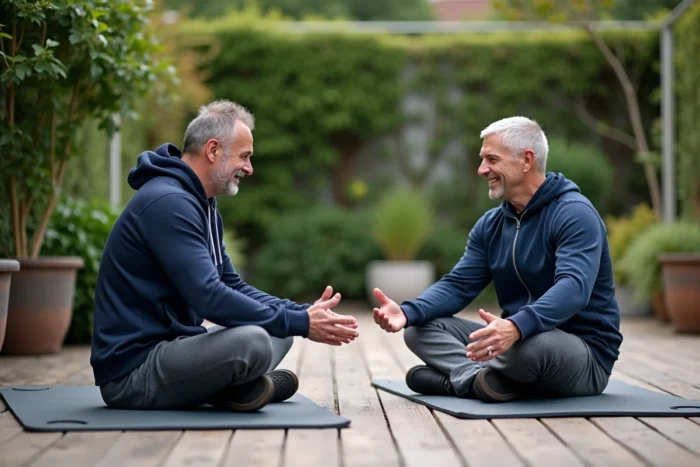
Choosing a home fitness coach: concrete selection criteria
Certifications matter, but they are not enough to guarantee quality follow-up. Here are the points to check before committing to multiple sessions.
- Registration as a personal services provider: without it, no tax credit. Ask for the registration number or the certificate from the contracting organization
- Experience with your specific profile: a coach accustomed to advanced athletes will not have the same reflexes as a coach trained in post-injury activity resumption or working with seniors
- Material adaptability: does the coach bring small equipment (bands, mats, light dumbbells) or do you need to invest in it yourself before the first session
- Cancellation policy: home sessions involve the coach traveling, and many charge for late cancellations. Clarify the conditions from the start
A good indicator of seriousness: the coach offers an initial evaluation session, free or at a reduced rate, before building the program. This session serves to test compatibility, assess physical condition, and visit the training space.
Home fitness coaching works when it is embedded in the long term and in the daily reality of the practitioner. A well-calibrated program, a properly assessed space, and a well-managed tax scheme transform what seems like a luxury into a long-term accessible health habit.