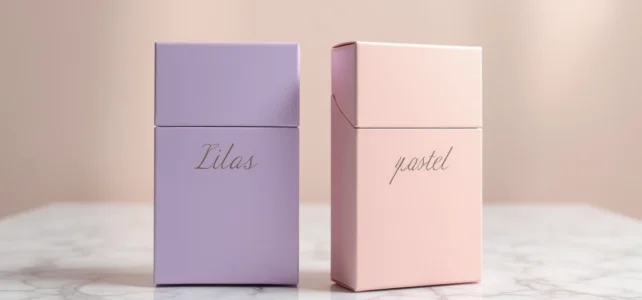
The Vogue range is based on a color code system where each shade corresponds to a blend, a filter ventilation rate, and a distinct aromatic profile. Comparing Lilac to Pastel is like opposing two philosophies of smoothness: one built on a floral note perceptible from the first puff, the other on a mechanical lightening of the draw without marked flavoring.
Filter ventilation and draw: the parameter that smokers underestimate
The sensation of smoothness does not depend solely on the blend. The filter ventilation dilutes the smoke with ambient air before it reaches the mouth, which reduces the perception of strength without altering the composition of the tobacco itself.
On a super slim format like that of Vogue, this ventilation has a proportionally greater impact than on a standard cigarette. The reduced diameter of the stick accelerates the draw: with each puff, the volume of smoke inhaled is smaller, and the dilution through the micro-perforations of the filter amplifies the lightness effect.
Pastel takes this principle further than Lilac. We observe that Vogue Pastel is positioned as the lightest reference in the range, still above the Essential in terms of perceived smoothness. Lilac, on the other hand, maintains a slightly more resistant draw, leaving more tobacco material in the mouth.
To properly understand the difference between Vogue Lilac and Pastel, one must look beyond taste and consider this filtration mechanism that shapes the overall sensation.
Vogue Lilac aromatic profile: a floral and sweet signature

Lilac stands out from the other Vogue colors with a floral aromatic note perceptible from the very first draw. This sweet dimension is also present in the ambient smell, even before the first puff. The blend combines Virginia and Burley tobaccos in proportions that allow this aromatic component to shine rather than drown it under bitterness.
On the palate, the attack delivers a slightly sweet note that fades in the middle of the cigarette in favor of a more classic tobacco roundness. The aftertaste remains discreet, without the dryness found in the more robust references of the range.
- Ambient smell: identifiable floral tone, more pronounced than in the Blue or Pastel
- Palate attack: light sweetness, almost candied, which distinguishes Lilac from all other shades
- Aftertaste: not very persistent, without pronounced bitterness, with a soft Virginia tobacco return
This profile is aimed at smokers looking for a taste dimension beyond mere smoothness. Lilac is not simply “light”; it offers a background aroma that Pastel does not attempt to replicate.
Vogue Pastel aromatic profile: neutrality as a choice
Pastel takes the opposite approach. The absence of marked flavoring is its main characteristic. The Virginia-Burley blend remains comparable to that of Lilac at its base, but the superior filter ventilation and ultra-light positioning smooth out the gustatory roughness.
The attack is almost neutral. No floral note, no perceptible sweetness. The smoke enters the mouth with an airy, diluted texture that gives an impression of transparency. Some smokers describe this sensation as “smoking warm air.”
The aftertaste is almost non-existent. This is precisely what Pastel aims for: a smoking experience where the tobacco is forgotten. For a smoker used to stronger cigarettes, the transition to Pastel may seem too radical. In this case, we recommend Lilac as an intermediate step.

Vogue Lilac or Pastel: choice criteria based on smoker profile
The choice between these two references is not just a matter of strength. It involves distinct sensory preferences.
- Smokers attentive to aromas: Lilac offers a richer taste palette, with its floral and sweet signature creating a true contrast with neutral cigarettes
- Smokers seeking maximum lightness: Pastel meets a demand for mechanical smoothness, where the filter ventilation does most of the work
- Transitioning from a standard cigarette: Lilac works better as an intermediate step, as it retains enough material in the mouth not to destabilize
- Sensitivity to ambient smell: Lilac leaves a more identifiable olfactory trace, which can be a positive or negative criterion depending on the consumption context
The super slim format, common to both, accentuates the differences in ventilation. On a standard diameter cigarette, the sensation gap between these two blends would likely be less perceptible. It is the narrow geometry of the stick that makes each variation in filtration more noticeable in the mouth.
One last technical point deserves attention: the combustion speed differs slightly between the two. The more ventilated Pastel tends to burn a bit faster during pauses between puffs. Lilac maintains a more regular combustion, which marginally extends the duration of the cigarette and allows more time to perceive the aromatic evolution between the first and last puff.