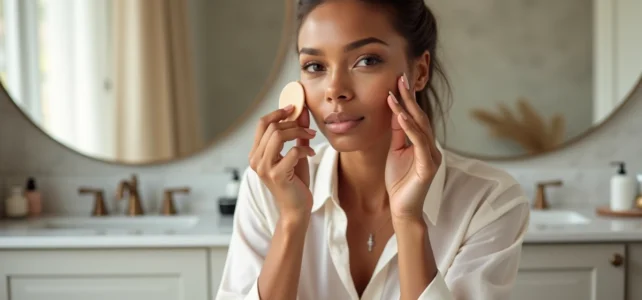
Choosing a full-coverage foundation that doesn’t turn into a plaster mask after a few hours presents a real challenge: coverage depends as much on the formula as on skin type, undertone, and the conditions in which the product is worn. Comparing the textures available on the market allows for quicker decisions than blind testing.
Full-coverage foundation and heat: what traditional guides overlook
Most comparisons pit fluid, cream, and powder textures against each other without ever mentioning the impact of temperature on the actual wear of coverage. In hot weather (heatwave, outdoor wedding, summer event), a thick liquid foundation tends to run and settle into expression lines.
Recent beauty sources recommend favoring compact versions in high heat, as they offer comparable coverage with better stability on the skin. Waterproof formulas complement this approach: Make Up For Ever positions its HD Skin, for example, as a waterproof, hydrating, and mattifying foundation designed to last without drying out, thanks to soothing and plumping active ingredients.
This market shift towards highly covering yet skincare-oriented textures changes the game. It becomes possible to find the best foundation for perfect coverage without sacrificing hydration or wear in challenging conditions.
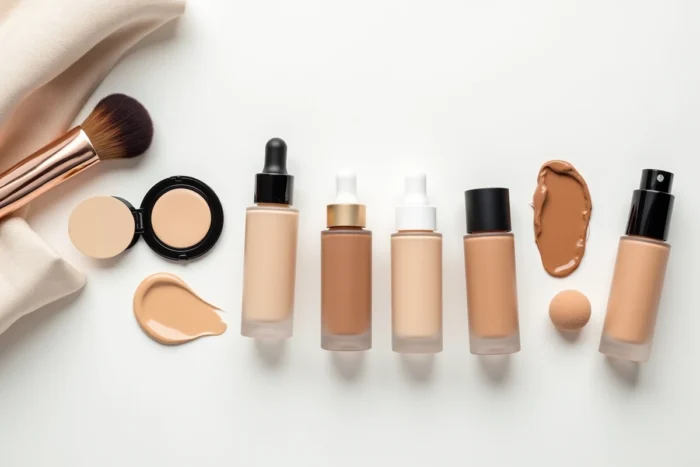
Comparison table of foundation textures by coverage
The choice of texture directly determines the level of coverage achieved and the finish on the face. This table summarizes the main characteristics to guide the decision.
| Texture | Coverage | Finish | Skin type | Main limitation |
|---|---|---|---|---|
| Light fluid / serum | Light to medium | Natural, luminous | Normal, combination | Does not mask marked imperfections |
| Compact cream | Medium to high | Satin, matte | Dry, normal | Can accentuate fine lines if not well-prepared |
| High coverage fluid | High | Matte or satin | Combination, oily | Risk of mask effect if applied thickly |
| Compact powder | Light to medium | Matte | Oily, combination | Accentuates dry areas |
| Cushion / BB cream | Light | Luminous, fresh | Normal, dry | Insufficient coverage for scars or redness |
For perfect coverage on a daily basis, compact creams and high coverage fluids dominate. In contrast, serum and cushion textures are more suitable for those seeking a “bare skin” effect without real correction.
Undertone and coverage: why the wrong shade ruins the result
A highly covering foundation amplifies the slightest shade error. With a light formula, a half-tone discrepancy goes relatively unnoticed. With high coverage, the same difference creates a visible demarcation at the jawline or neck.
The precision of the undertone matters as much as the clarity of the shade. Undertones fall into three categories: warm (greenish veins at the wrist), cool (bluish veins), and neutral (a mix of both). A foundation that is too yellow on a cool undertone gives a grayish appearance, while a foundation that is too pink on a warm undertone leans orange.
The specific problem of medium to dark skin
The standard offering in high coverage often remains calibrated for light to medium skin tones. The creator of the KALISAE brand has developed a range designed for medium to dark skin, with a fine mapping of undertones to avoid overly red, gray, or yellow foundations. This type of specific formulation reduces the mask effect produced by poorly matched full-coverage foundations on deep skin tones.
Testing the shade on the jawline (and not on the back of the hand) remains the most reliable method. Natural light, near a window or outdoors, reveals discrepancies that artificial lighting in stores can mask.
Applying full-coverage foundation: mistakes that create the mask effect
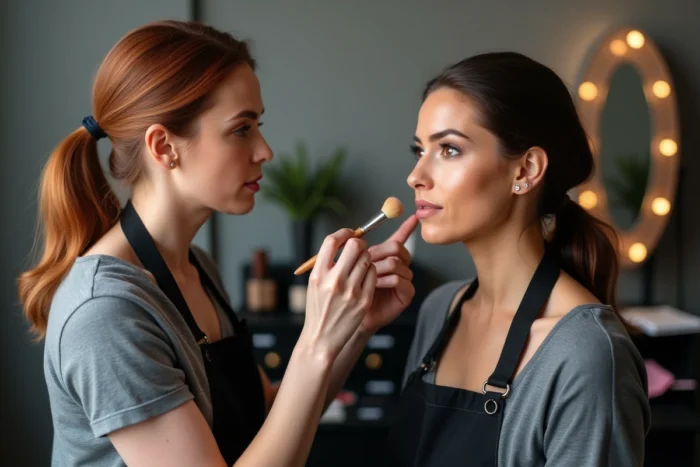
Coverage does not depend solely on the product. The application method radically alters the final result. Two gestures make the difference between a unified complexion and a frozen face.
- Prepare the skin with an appropriate moisturizing treatment: on dry skin, a full-coverage foundation clings to flakes and highlights every dehydrated area. A light moisturizer, absorbed a few minutes before application, smooths the surface.
- Apply in thin layers rather than one thick layer: deposit a small amount, blend, then add only to areas that need more correction (dark circles, redness, scars). The rest of the face maintains a lighter veil.
- Use a damp sponge (like a beauty blender) instead of a flat brush for very covering formulas: the damp sponge slightly dilutes the product and presses the pigments into the skin instead of spreading them on the surface, which reduces streaks and thickness.
Setting also plays an underestimated role. A translucent loose powder applied with a large brush to the T-zone stabilizes coverage without adding visible material on the cheeks.
Full-coverage foundation for events or daily wear: adapting the formula
A wedding or photo shoot does not require the same formula as a workday. For an event, waterproof high-coverage foundations perform better under lights and resist sweating. For daily wear, a buildable cream texture offers a better compromise between correction and comfort.
Layering a targeted concealer (on dark circles or a localized area of redness) under a medium coverage foundation often achieves a result equivalent to a very covering product, with less material on the entire face. This targeted layering approach limits the heaviness that some high-coverage formulas can cause after several hours.
The choice of full-coverage foundation boils down to three concrete considerations: the texture suited to one’s skin type and wearing conditions, the precision of the undertone to avoid a flat effect, and the application method using thin layers. Investing time in these three points makes the rest of the process much simpler.