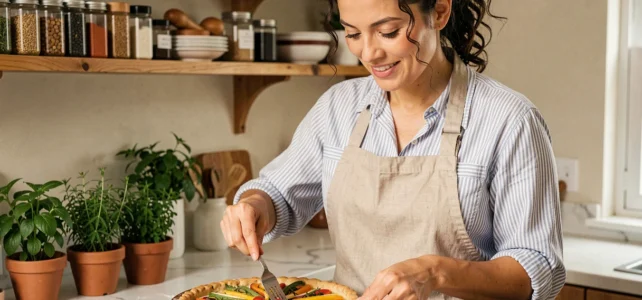
Everyday French cuisine is undergoing a subtle transformation. Between the success of meal boxes delivered to homes, the return of ancestral cooking techniques, and the physical transformation of the spaces where meals are prepared, habits are changing faster than cookbooks can be updated. This context reshapes what it concretely means to “reinvent your daily cooking.”
Cooking over fire and slow processes: techniques that change the taste of homemade dishes
French gastronomic trends for 2026 highlight a phenomenon that goes beyond fashion: the return of fire and slow cooking in everyday cuisine. Embers, plancha, charcoal grill, long fermentations. These techniques, long reserved for restaurants or summer barbecues, are now settling into home kitchens.
The interest lies not only in the aesthetics of the gesture. Cooking over direct flame alters the texture of vegetables and meats in a way that a non-stick pan cannot replicate. Maillard reactions express themselves differently, and flavors gain depth without the addition of extra fat.
Applying these methods daily requires little equipment. A small cast-iron grill on a classic stovetop is enough to grill eggplants, peppers, or slices of bread. Fermentation, on the other hand, only requires a jar and salt. Those who wish to explore cooking on Idées Gâteaux will find recipes that adapt well to this type of approach, ranging from pastry creations to everyday dishes.
Field reports diverge on one point: does cooking over fire really take longer than conventional cooking? For direct grilling, no. For fermentations and long braises, the active preparation time remains short, but the total time extends. Meal planning changes more than the effort involved.
Creative recipes and seasonal products: what meal boxes reveal about our habits
Meal kit services (HelloFresh, Quitoque, Les Commis, Seazon) are no longer a niche phenomenon. Their main selling point, the reduction of the grocery chore combined with guided recipes, touches a sensitive point: the lack of time to come up with varied dishes each week.
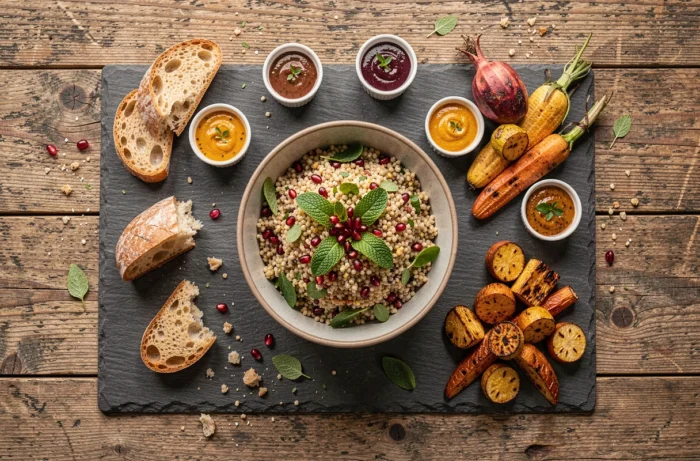
These boxes systematically highlight seasonal products, vegetarian or vegan options, and a growing attention to packaging (recyclable materials, reduction of plastic). The model works as a shortcut to culinary diversity: each week, new ingredients and new combinations of textures arrive without the need for research effort.
However, these services raise a rarely addressed question: does cooking from a pre-portioned kit foster culinary creativity or stifle it? Two interpretations coexist.
- For beginners, the boxes function as a gradual learning process. Discovering an unknown vegetable in a kit can spark the desire to buy it at the market and incorporate it into their own recipes.
- For cooks already comfortable in the kitchen, the guided format can become a crutch that hinders improvisation, the kind that produces the best dish ideas.
- The cost per meal remains higher than bulk shopping, which limits daily use for a large portion of households.
The available data does not allow for a definitive conclusion on the long-term effect of these boxes on users’ culinary skills. The phenomenon is recent, and independent studies on the subject are still lacking.
Open kitchens and multifunctional islands: when space redefines everyday recipes
Trends in layout for 2025-2026 show a kitchen designed as a direct extension of the living room. Hidden appliances, uniform facades, elimination of upper cabinets, islands that serve as work surfaces, dining tables, and sometimes desks. The kitchen becomes a living space where much more than cooking happens.
This change has a concrete effect on the recipes we prepare. An island open to the living room encourages more visual, carefully presented preparations, because guests can see everything. Dressed dishes, colorful culinary creations, and composed plates gradually replace the single dish served from the closed kitchen.
The warm minimalism (wood, stone, textured metal, beige and brown tones) that dominates these layouts also influences the meal atmosphere. A clean space encourages recipes with few but well-prepared ingredients, rather than lengthy dishes that clutter the visible work surface.
Practical constraints of open kitchens
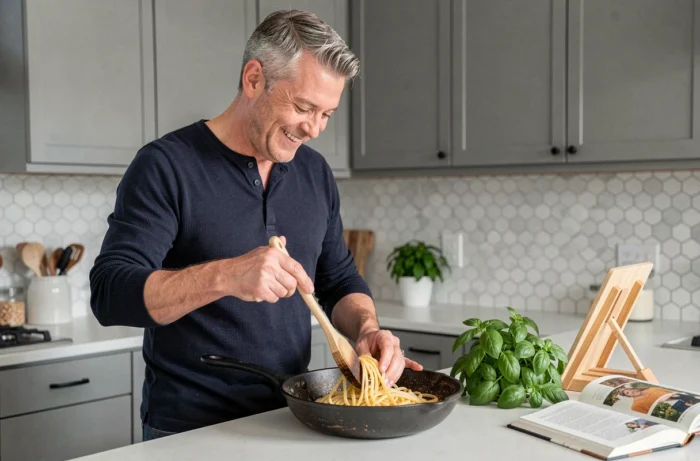
Cooking in an open space imposes limits that layout magazines rarely mention. Frying or long cooking odors invade the living room. Even efficient range hoods are not always sufficient. The noise of a blender while someone works on a video call at the neighboring island creates real domestic friction.
These constraints steer the choice of home recipes towards gentle cooking, oven dishes, composed salads, or cold preparations. The ultra-raw techniques mentioned earlier (grill, flame) paradoxically become more suited to an outdoor space than to this open kitchen-living room.
Fermented vegetables and homemade condiments: the most underestimated lever in creative cooking
Reinventing meals does not always require new complete recipes. A homemade condiment transforms an ordinary dish into a gourmet creation. A quick kimchi, a radish pickle, or an herb-infused oil can radically change the perception of a basic dish.
Lactic fermentation, in particular, produces sour and umami flavors that are impossible to achieve otherwise. A simple fermented cabbage for a few days pairs well with a sandwich, a bowl of rice, or grilled meat. The cost is negligible: salt, a vegetable, a jar.
- Kimchi can be prepared in less than twenty minutes of active work, then ferments on its own for three to seven days depending on the ambient temperature.
- Quick vinegar pickles (cucumber, red onion, carrots) are ready in an hour and can be stored for several weeks in the refrigerator.
- Infused oils and vinegars (tarragon, garlic, chili) require only patience and a clean bottle.
These preparations fit into any culinary style. They add complexity to textures and flavors without altering the main recipe. This is probably the most cost-effective gesture to diversify your cooking without changing your budget.
Creative cooking in everyday life does not rely on expensive equipment or spectacular recipes. A fermented condiment, a rethought cooking method, a space that invites careful presentation: these discreet levers produce more lasting results than yet another cookbook flipped through once and then forgotten on a shelf.